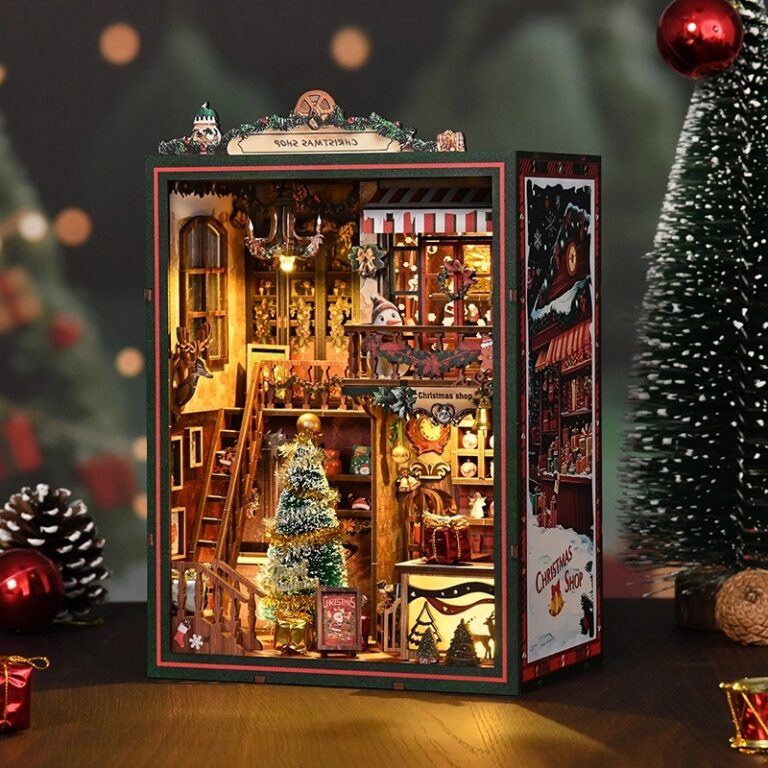
Book Nooks: The Ultimate Guide to Miniature Reading Worlds, DIY Tips, and Display Ideas
Book nooks turn ordinary shelves into tiny story portals. Whether you buy a kit or build from scratch, a well-made book nook combines miniatures, lighting, and clever perspective to create a scene that feels alive between your books.
What Are Book Nooks?
A book nook (sometimes called a “bookshelf insert” or “book nook diorama”) is a narrow, box-like miniature scene designed to fit between books on a shelf. Most book nooks are built to the approximate height of standard novels, using forced perspective, layered backgrounds, and LED lighting to create depth in a small space.
Unlike traditional dollhouses, book nooks are meant to be displayed in the bookshelf—so the scene looks like a hidden alley, library corridor, fantasy gateway, or cozy shop tucked between book spines.
Why Book Nooks Are So Popular
1) They Enhance a Bookshelf Without Taking Over Your Room
Book nooks provide a high-impact display while staying compact. A single book nook can change the mood of an entire shelf, especially when paired with warm lighting.
2) They Blend Crafting and Storytelling
Many readers love book nooks because they feel like a physical extension of reading. You’re not just decorating—you’re building a setting, atmosphere, and narrative in miniature.
3) They Make Memorable Gifts
Because book nooks are customizable by theme, they’re popular gifts for book lovers, fantasy fans, and hobbyists who enjoy hands-on projects.
Common Book Nook Themes (and How to Choose One)
The best book nooks usually match the owner’s reading taste or the vibe of their home library. Here are the most searched and collected themes:
Cozy & Literary
- Classic library corridors and spiral staircases
- Bookshops, reading rooms, and study nooks
- Street lamps, cobblestones, and rainy alleyways
Fantasy & Adventure
- Wizard streets, potion shops, and enchanted doors
- Forest paths, hidden temples, and dragon lairs
- Steampunk airships and clockwork cities
Sci‑Fi & Cyberpunk
- Neon-lit alleys, futuristic vending machines, holograms
- Spaceship corridors, labs, or alien marketplaces
Travel & Real-World Places
- European side streets, canal scenes, or tiny cafés
- Subways, train stations, and city skylines
Quick selection tip
If you’re buying your first book nook kit, pick a design with fewer micro-details and clear instructions. If you’re crafting from scratch, choose a theme you won’t mind revisiting for several evenings—because book nook building rewards patience.
Book Nook Kits vs. DIY Builds
Book Nook Kits: Best for Beginners
A book nook kit typically includes laser-cut wood or MDF panels, printed textures, miniature components, and LED wiring. Kits reduce decision fatigue and help you learn techniques like layering, alignment, and lighting.
Pros
- Pre-cut parts and predictable fit
- Faster results with a polished look
- Good introduction to miniature assembly and LED placement
Cons
- Less customization unless you repaint and retexture
- Some kits require careful sanding and dry-fitting
DIY Book Nooks: Best for Customization
A DIY book nook starts with a measured box and a concept sketch. Builders often use foam board, basswood, balsa wood, 3D printed parts, or polymer clay, then add paint, textures, and lighting.
Pros
- Unlimited creative control and personal storytelling
- Easy to match a favorite book, series, or setting
Cons
- Requires planning, measuring, and prototyping
- More tools and time
Essential Tools and Materials for Book Nooks
You don’t need a full workshop to build book nooks, but the right basics improve accuracy and safety.
Core tools
- Precision craft knife (plus extra blades for clean cuts)
- Metal ruler and a cutting mat
- Fine-tip tweezers for tiny parts
- Small clamps or painter’s tape for alignment
- Sandpaper (fine grit) for edges and fit
Adhesives (choose based on material)
- PVA/wood glue for wood and paper (slow but strong)
- Super glue (cyanoacrylate) for quick bonds (use sparingly)
- Hot glue for fast positioning (bulkier finish)
Lighting basics
LED strips and tiny LEDs are common in book nooks. Warm white creates a cozy library feel, while cool white or colored LEDs work well for sci‑fi and neon city themes.
For a practical primer on safe LED wiring, see Adafruit’s learning resources: https://learn.adafruit.com/.
How to Build a Book Nook (Beginner-Friendly Process)
Whether you’re assembling a kit or crafting from scratch, the workflow is similar. These steps help prevent common mistakes like warped walls, crooked layers, or visible glue marks.
Step 1: Measure Your Shelf Space
Standard book nooks often fit a book-sized footprint, but shelves vary. Measure the height and depth available before choosing a kit or finalizing a DIY plan.
Step 2: Dry-Fit Everything
Before glue, assemble the box and major layers without adhesive. Dry-fitting reveals alignment issues early—especially important for perspective hallways and stair scenes.
Step 3: Build in Layers for Depth
Most successful book nooks use layered scenery: foreground objects, midground architecture, and a background print or painted scene. This is where forced perspective makes a small insert look far larger.
Step 4: Add Lighting Early (Not Last)
Plan where wires will run and where the battery pack or USB cable will exit. Hiding wiring becomes difficult after walls are sealed.
Step 5: Finish Surfaces and Details
Paint, weathering, and texture add realism. Even small upgrades—like dry brushing edges, adding dusting powder, or using matte varnish—make miniature scenes look less like printed parts and more like environments.
Tip for cleaner results
Use minimal glue, apply it with a toothpick, and wipe squeeze-out immediately. In miniature work, glue shine is often the biggest “scale breaker.”
Display Ideas: Where Book Nooks Look Best
Between Book Series or Genres
Place a fantasy-themed book nook between fantasy novels, or a vintage street scene between classics. This creates visual “chapters” in your shelf design.
With Accent Lighting
If your book nook has internal LEDs, you can enhance it by adding soft shelf lighting. Consider using a timer or smart plug so you can enjoy the glow without draining batteries.
As a Desk or Nightstand Feature
Some book nooks look great on a desk as a miniature lamp-like display. Just ensure stability and protect it from spills.
Care, Cleaning, and Long-Term Maintenance
- Dust control: Use a soft makeup brush or a camera lens blower for delicate areas.
- Sunlight: Avoid direct sun to prevent fading of printed textures and paint.
- Humidity: Keep paper-based book nooks away from damp spaces to prevent warping.
- LED upkeep: If your book nook uses coin cells, replace them before they leak. For USB-powered designs, avoid sharply bending cables.
Where to Find Inspiration and Tutorials
For step-by-step miniature techniques (painting, textures, and diorama composition), you can explore reputable communities and learning hubs:
- r/miniatures (Reddit): https://www.reddit.com/r/miniatures/
- Instructables (DIY tutorials): https://www.instructables.com/
- Adafruit Learning System (LED basics): https://learn.adafruit.com/
Internal reading
If you’re planning a broader miniature project, continue with related guides on diorama composition and scale modeling. (Internal link example for your website: Diorama Basics and Miniature Lighting.)
Frequently Asked Questions About Book Nooks
How long does it take to build a book nook?
Simple book nook kits may take a few hours, while detailed scenes can take multiple evenings. DIY book nooks vary widely based on complexity and finishing work.
Are book nooks suitable for kids?
Many book nooks contain small parts, sharp tools, and adhesives. They’re usually best for teens and adults, or for younger builders with close supervision.
Do book nooks need glass or an acrylic cover?
Not required, but a clear acrylic front can reduce dust and protect delicate details. If you add a cover, ensure ventilation and access to the power switch or battery pack.
What size should a book nook be?
Common dimensions are similar to a hardcover book height, but the best size is the one that fits your shelf depth and doesn’t protrude beyond your books.
Conclusion: Start Small, Then Build Your Dream Shelf
Book nooks are one of the most rewarding ways to personalize a library space. Start with a theme you love, prioritize clean construction and thoughtful lighting, and you’ll quickly see why book nooks have become a favorite craft for readers and collectors alike.