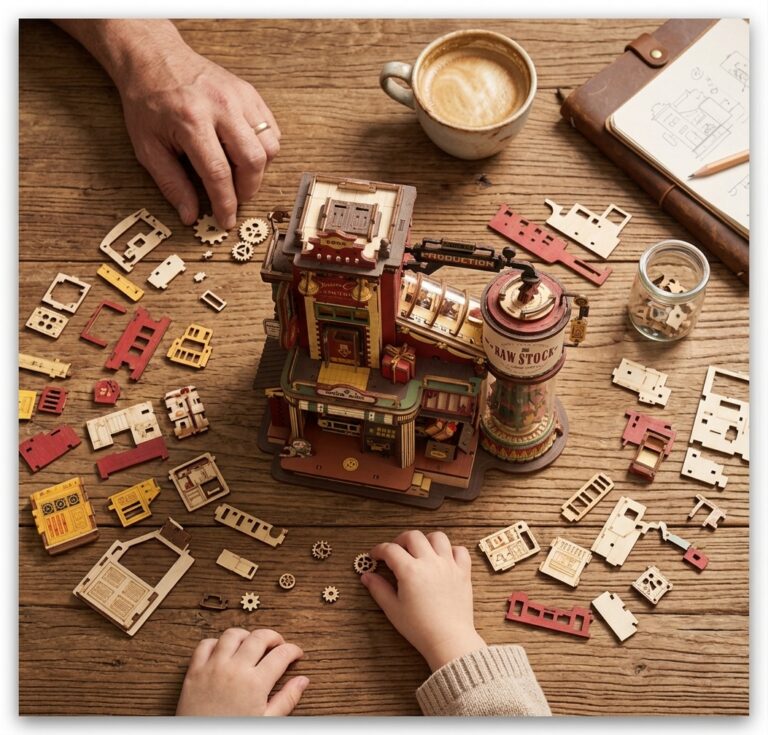
3D Puzzle Guide: Types, Benefits, and How to Choose the Best 3D Puzzle
Looking for a 3D puzzle that’s fun, challenging, and worth displaying when finished? A 3D puzzle turns a classic pastime into a hands-on building experience—creating models that stand up, show architectural detail, or even function as décor. This guide explains what a 3D puzzle is, the most popular types, how to pick the right difficulty, and practical tips to complete your next build smoothly.
What Is a 3D Puzzle?
A 3D puzzle is a puzzle that assembles into a three-dimensional structure instead of a flat image. Depending on the design, you might connect pieces by interlocking tabs, layering foam boards, stacking wooden components, or building with molded plastic parts. Many 3D puzzles represent landmarks, vehicles, animals, or globes, while others create functional objects such as organizers or small containers.
Why 3D Puzzles Are So Popular
They Combine Building and Puzzle-Solving
Unlike a standard jigsaw, a 3D puzzle requires you to think about shape, stability, and assembly order. This makes each step feel like engineering—especially with architectural models.
They Create Display-Ready Results
Finished 3D puzzles often look like scale models you can keep on a shelf. Many builders choose themes they love (famous buildings, space, fantasy) and treat the final piece as a collectible.
They Support Skill Development
Completing a 3D puzzle can help improve spatial reasoning, concentration, patience, and fine motor skills. For families, they can also be a great collaborative activity.
Common Types of 3D Puzzle (and Who They’re For)
3D Jigsaw Puzzle (Curved or Stacked)
These puzzles use curved or specially shaped pieces to create spheres (like globes) or layered structures. They’re great for people who already enjoy traditional jigsaws and want a new twist.
Foam Board 3D Puzzle (Architecture and Landmarks)
Foam puzzles typically come as pre-cut sheets with numbered pieces. They’re popular for building landmarks such as castles, bridges, or city skylines. They tend to be lightweight and beginner-friendly while still offering impressive detail.
Wooden 3D Puzzle (Mechanical and Craft-Style Builds)
Wooden 3D puzzles are often laser-cut and can range from simple animals to complex mechanical models. Some include moving parts, gears, or crank mechanisms. These are ideal if you enjoy craft projects and want a more “maker” experience.
Plastic Model-Style 3D Puzzle
Some 3D puzzles resemble snap-fit model kits. They can provide sharp detail and sturdy builds. If you like precision assembly and clean finishes, this type may be a good fit.
How to Choose the Best 3D Puzzle
1) Pick a Theme You’ll Want to Finish
Motivation matters more in 3D builds than most people expect. Choose a theme you genuinely like—landmarks, vehicles, animals, or fantasy structures—so the time investment feels rewarding.
2) Match the Difficulty to Your Experience
- Beginner: larger pieces, fewer steps, simpler shapes, foam board kits with clear numbering
- Intermediate: smaller parts, multi-layer designs, moderate structural complexity
- Advanced: dense builds, intricate wood mechanisms, tight tolerances, many similar-looking parts
3) Check Piece Count—But Don’t Rely on It Alone
Piece count is a rough guide, but complexity depends on piece similarity, structural supports, and whether the build requires precise sequencing. A 150-piece mechanical wooden 3D puzzle can feel harder than a 500-piece foam landmark.
4) Consider Build Time and Display Space
Before buying, check the finished dimensions and estimated assembly time. If you want a shelf display, confirm it fits your available space and won’t be easily knocked over.
5) Look for Clear Instructions and Replacement Policies
For most builders, the best 3D puzzle is the one with readable diagrams and consistent part labeling. If you’re buying a premium kit, it’s worth checking whether the brand offers missing-piece support.
Step-by-Step Tips to Complete a 3D Puzzle Successfully
Prepare Your Workspace
- Use a flat, well-lit surface with room to organize parts.
- Keep a small tray or bowls for sorting pieces by type.
- If it’s a wooden kit, consider a nail file or fine sandpaper for smoothing tabs (only if needed).
Read the Instructions Once Before Starting
Most issues happen when builders miss a structural step early on. Skimming first helps you understand how the internal supports work, especially for towers and domes.
Sort by Shape and Function
For a 3D puzzle, sorting by “where it belongs” can be more helpful than sorting by color. For example: base pieces, supports, wall panels, roof parts, decorative elements.
Build in Stable Layers
Many 3D puzzles become fragile if you attach detail pieces too early. Finish the structural core first (base, frame, main walls), then add delicate decorations at the end.
Don’t Force Tight Fits
If something won’t fit, double-check orientation and the step order. Forcing pieces can bend foam or snap wooden connectors.
Are 3D Puzzles Good for Kids?
Yes—many 3D puzzles are designed for kids, but it’s important to match the recommended age and complexity. Younger builders often do best with foam board models that have large, numbered pieces and minimal tiny connectors. For older kids and teens, wooden 3D puzzles can be a great STEM-style activity if adult supervision is available.
Care, Storage, and Display Ideas
Dust and Sunlight
To keep your 3D puzzle looking new, dust it gently with a soft brush. Avoid prolonged direct sunlight to reduce fading—especially for printed foam and colored finishes.
Move It Safely
When relocating a finished 3D puzzle, lift from the base rather than grabbing tall sections (like spires or antennas). If the model is delicate, transport it in a box with soft padding.
Display Options
- Use a stable shelf with enough depth for the base.
- Consider a clear display case for intricate builds.
- Group similar themes (landmarks together, vehicles together) for a cleaner look.
Frequently Asked Questions (FAQ)
What’s the difference between a 3D puzzle and a model kit?
A 3D puzzle typically focuses on interlocking construction without glue, paint, or specialized tools, while model kits may require adhesives, painting, or advanced finishing. However, some wooden and plastic 3D puzzles can resemble model kits in complexity.
Do I need glue for a 3D puzzle?
Most are designed to hold together without glue. If you plan to display a model long-term, a small amount of glue may help reinforce stress points—only if the manufacturer allows it.
How long does a 3D puzzle take?
It depends on the type and difficulty. Simple foam builds may take 30–90 minutes, while detailed wooden mechanical models can take several hours or multiple sessions.
Conclusion: Choose a 3D Puzzle You’ll Enjoy Building and Displaying
The best 3D puzzle is one that matches your interests, your skill level, and the time you want to spend building. Start with a theme you love, confirm the model size, and pick a difficulty that feels challenging but realistic. With a good workspace and a steady, step-by-step approach, you’ll end up with a build that’s just as satisfying to assemble as it is to show off.